

Benefits of Epoxy Vapor Barrier on Concrete Flooring
Protect your concrete floor investment
A concrete floor surface may look like a solid, nonporous surface, but in reality, it’s a porous material that acts like a hard sponge.
In many environments, especially in humid regions of the country with high ground water or poor drainage, soil moisture can migrate up through the slab and potentially affect many floor surfaces. This invisible force can greatly affect your finished floor surfaces, including epoxy and polyurea floor finishes.
Additionally, other floor surfaces like traditional LVT (vinyl tile), hardwood, and LVP (luxury vinyl plank) and their adhesives can emulsify and lose adhesion, resulting in delamination of floor surfaces. Applying an epoxy vapor barrier is a great way to protect your investment.
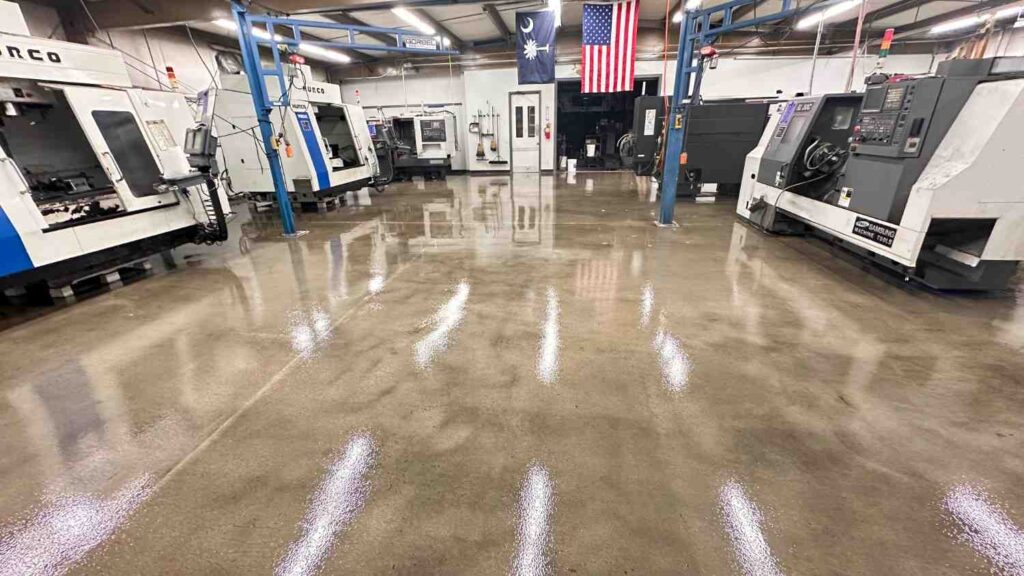
Stop moisture vapor transmission
Problems that can arise due to moisture vapor transmission in epoxy and polyaspartic floor systems include:
- Delamination: Epoxy and other resinous coatings can lose their adhesive bond with the concrete surface.
- Osmotic Blistering: Small pockets of moisture can appear in the surface as fluid-filled “bubbles” or blisters.
- Efflorescence: White, powdery mineral content/salt deposits from the concrete can leach up into the surface of the concrete, clouding the finish.
- Mold Risk: Trapped moisture from moisture migration can reside under your floor surfaces, leading to mold growth
Green or “new” concrete slabs can hold moisture long after the slabs are in place. Epoxy vapor barriers can speed up the installation timeline for floor products.
An epoxy moisture vapor barrier is one way we can alleviate the problems associated with high humidity in concrete slabs. Proper concrete surface preparation is key for successful installation of these products.
New concrete slabs in newly constructed facilities will usually permanently climatize if an approved plastic vapor barrier was installed under the concrete slab during construction. Running HVAC in new construction with enough time will often decrease the relative humidity to meet specifications for installing epoxy flooring and other floor types.
Consult with Industrial Safety Coatings for Moisture Testing Services to see if your concrete slab has relative humidity above your flooring requirements.